
Private Jet Categories
Private jets are grouped into four broad categories (light, midsize, heavy, and long-range) defined by cabin size, range, and mission. Super-midsize and ultra-long-range are sub-categories that sit between the main four.
The categories above aren't official FAA classifications. The FAA cares about weight, not cabin size. They're consensus industry labels used by brokers, operators, and booking platforms to communicate the rough capability of an aircraft in one word. Within each category, individual aircraft vary, and some models genuinely straddle two categories. Use the labels as a first filter, not a final answer. The hourly cost ranges shown below reflect published 2026 market averages across major US brokers and operators. Different sources give different numbers, so each range is intentionally wide. Actual quotes vary meaningfully by aircraft age, operator, route, and positioning.
Light jets
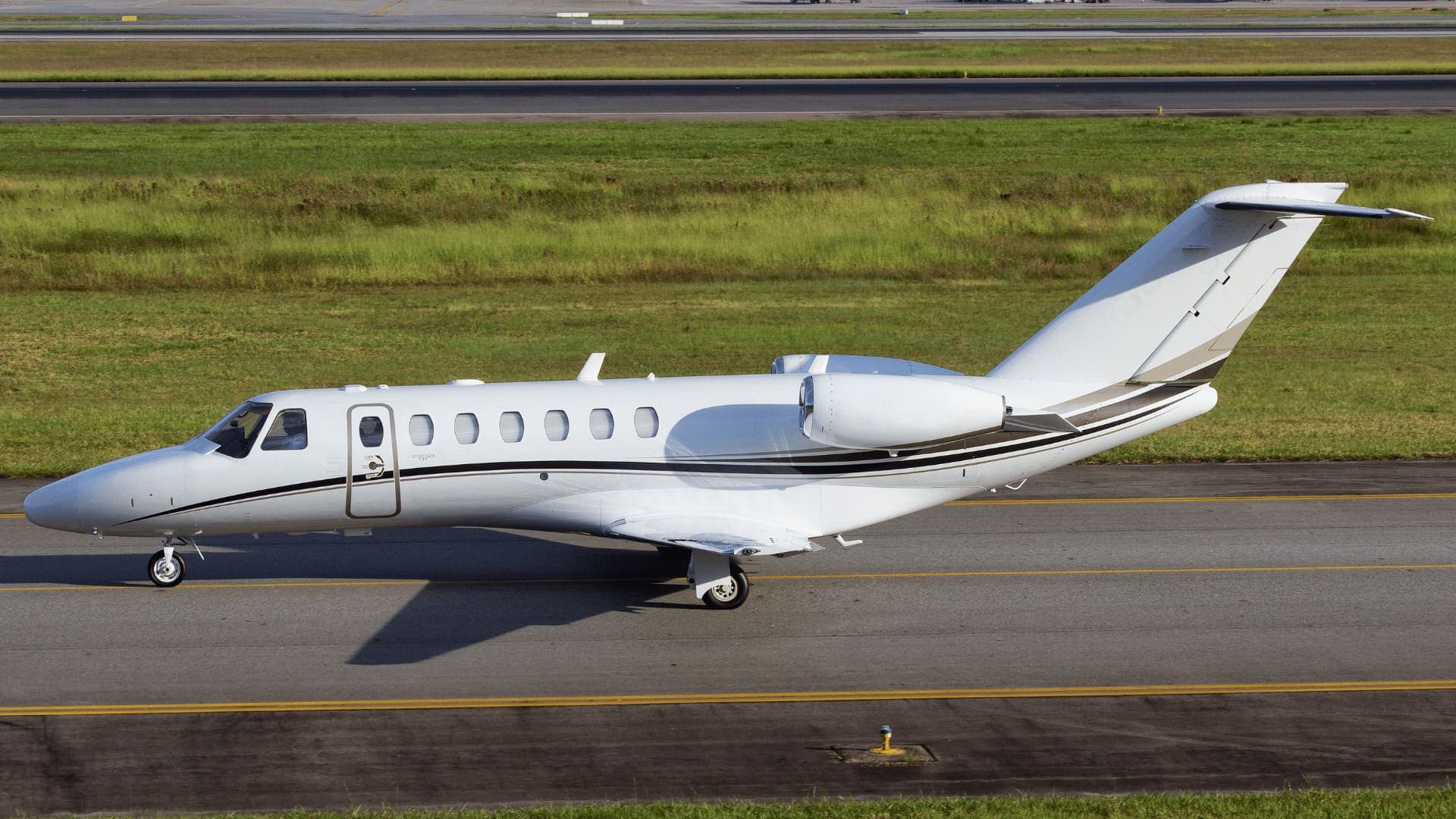
Typical capacity: 4 to 7 passengers. Typical range: 1,500 to 2,000 nautical miles. Typical hourly cost: $3,500 to $5,500 for the most commonly-chartered models (Citation CJ4, Phenom 300); older or budget light jets can run lower. Example aircraft: Cessna Citation CJ3/CJ4, Embraer Phenom 300, Bombardier Learjet 75, Pilatus PC-24. Light jets are the workhorse of private aviation. They handle trips up to about three hours of flight time comfortably: New York to Chicago, Los Angeles to Denver, Miami to Charlotte. Their real advantage is runway performance. Many light jets can operate from runways under 3,500 feet, which opens up airports the bigger categories can't touch. A Pilatus PC-24 is rated to 2,900 feet, which is why you'll see it landing at places like East Hampton (HTO) or Friday Harbor. The trade-off is cabin size. Most light jets have stand-up headroom only in the aisle, compact galleys, and enclosed but small lavatories. For a four-person trip under three hours, this is rarely an issue. For six people on a five-hour flight, it can feel like a long afternoon.
Midsize jets
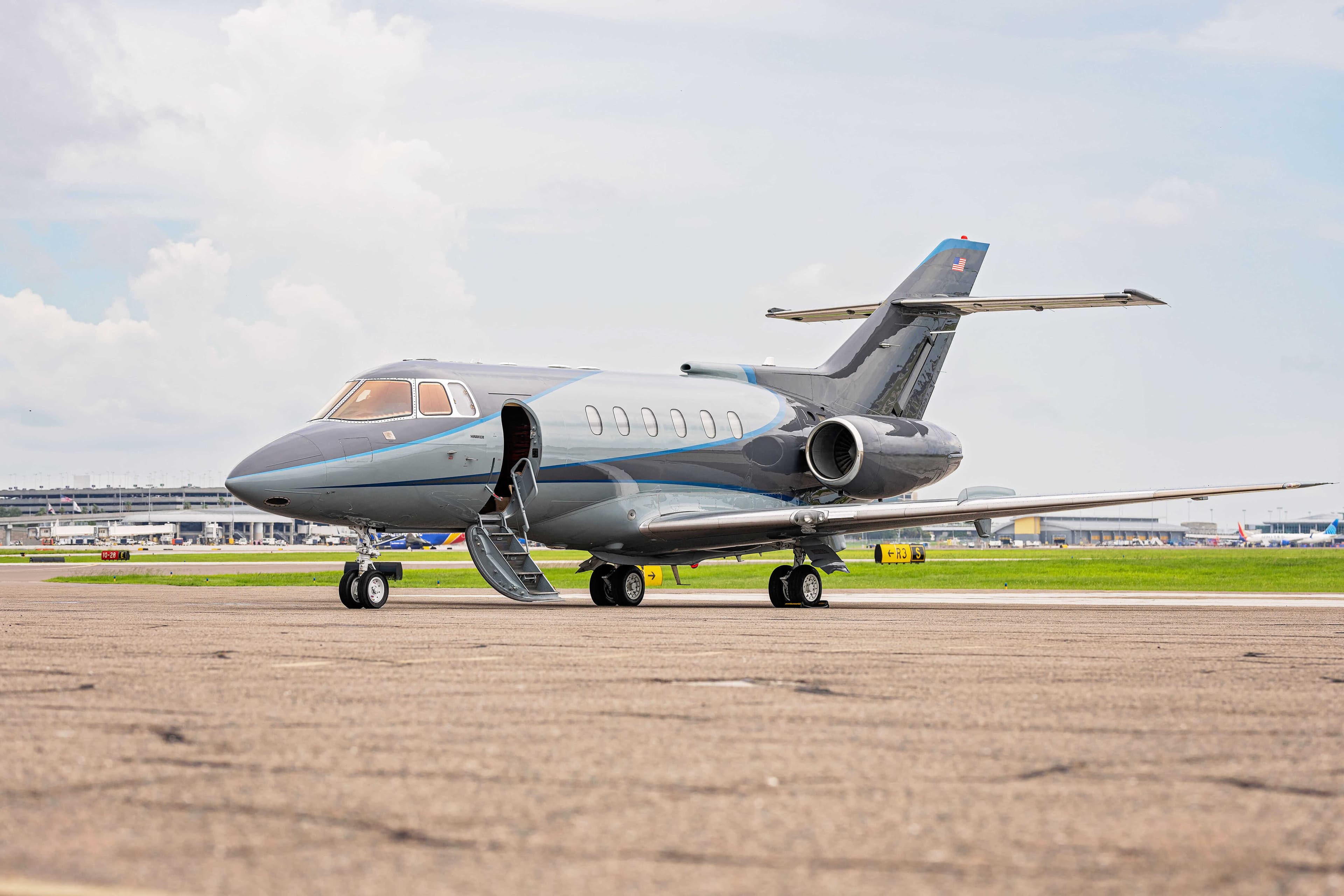
Typical capacity: 6 to 9 passengers. Typical range: 2,000 to 3,000 nautical miles. Typical hourly cost: $4,000 to $7,000. Example aircraft: Cessna Citation Excel/XLS+, Hawker 800XP/900XP, Bombardier Learjet 60. Midsize jets solve the "slightly longer, slightly bigger" problem that light jets can't quite cover. Useful range extends to about four hours of flight, which covers most domestic missions comfortably: New York to Miami, Boston to Houston, Seattle to Dallas. Coast-to-coast is still a stretch. Los Angeles to New York typically needs a fuel stop on a midsize, depending on winds and load. Cabins move up a full class. Stand-up height throughout, full-width forward galleys, enclosed lavatories with proper doors, and seating arrangements that let six or seven passengers spread out without feeling packed. The unspoken limitation on many midsize jets is catering. Most don't have hot-galley capability, so meals are limited to cold platters and snacks unless the specific aircraft has heating installed. For a dinner flight, it matters.
Heavy jets
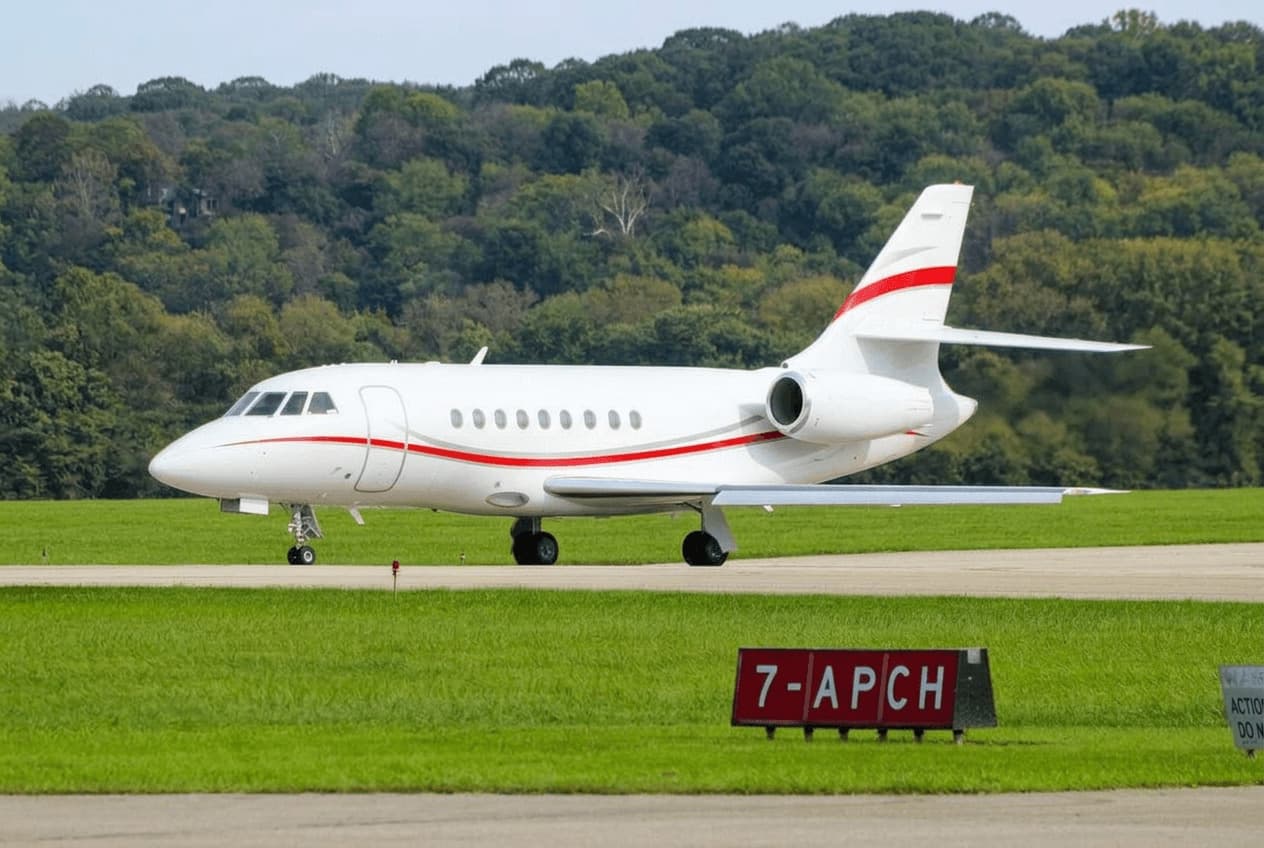
Typical capacity: 10 to 16 passengers. Typical range: 3,500 to 4,500 nautical miles. Typical hourly cost: $8,000 to $14,000. Example aircraft: Dassault Falcon 2000, Gulfstream G450, Bombardier Challenger 604/605. Heavy jets are the sweet spot for coast-to-coast domestic travel, larger groups, and routes just short of transatlantic. Cabins are divided into distinct zones: typically a club-four configuration up front, a divan or conference grouping mid-cabin, and sometimes a private aft cabin that can be curtained off. Full galleys with hot-meal capability come standard on most. Wi-Fi is standard on newer tail numbers and increasingly common on older ones. "Heavy" is a category with a lot of room inside it. A Falcon 2000 sits near the smaller end of the range (still firmly heavy by classification); a Gulfstream G450 is a meaningfully different aircraft at the upper end, with a bigger cabin, longer legs, and higher cost. When a broker quotes you "a heavy jet," ask which specific aircraft. Price-per-hour and cabin experience vary more within this category than any other.
Long-range and ultra-long-range
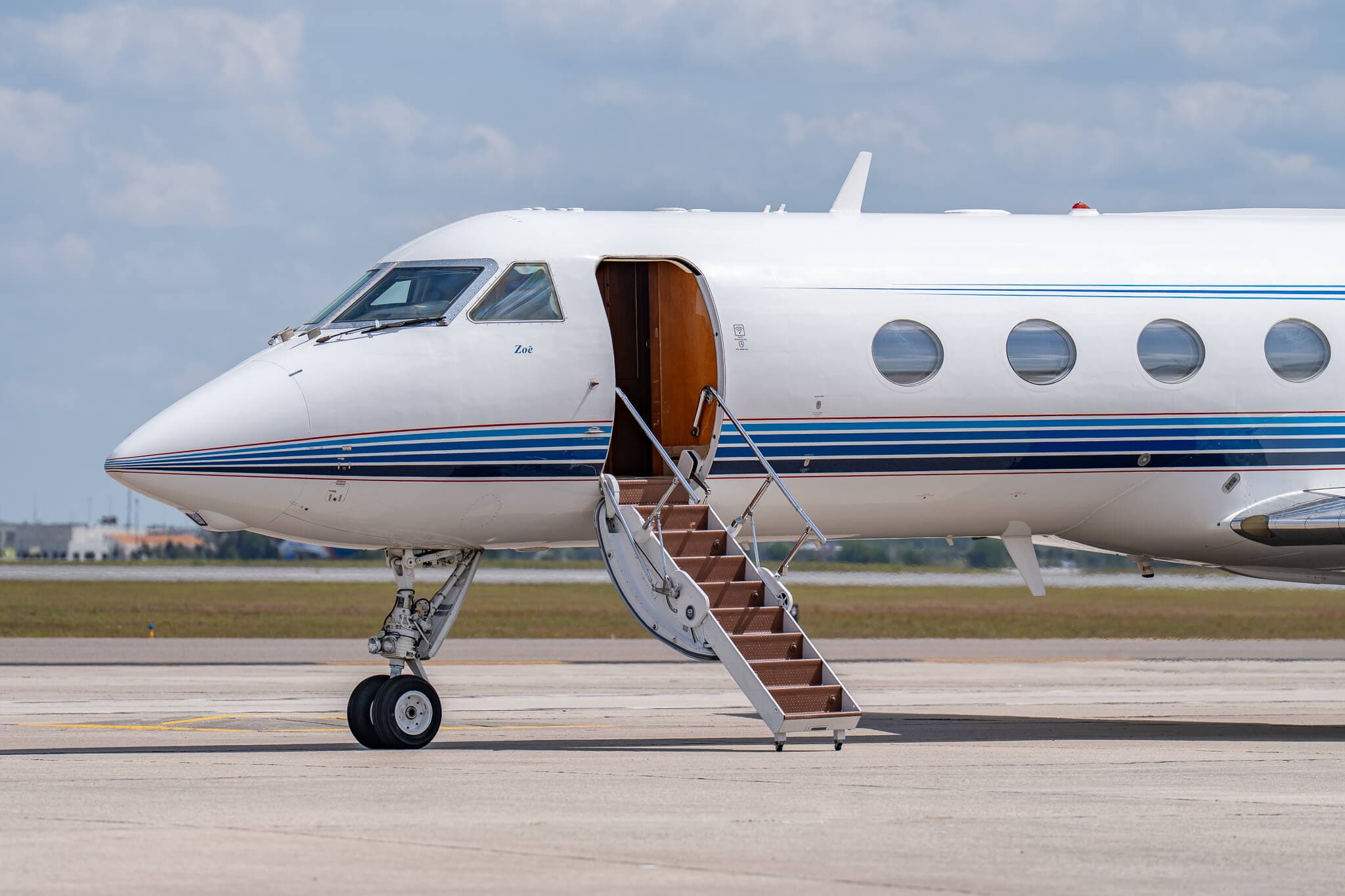
Typical capacity: 12 to 19 passengers. Typical range: 5,500 to 7,500+ nautical miles. Typical hourly cost: $10,000 to $14,000+, with ultra-long-range models often quoted above $13,000 per hour. Example aircraft: Gulfstream G550/G650, Bombardier Global 6000/7500, Dassault Falcon 7X/8X. This is the transcontinental and transoceanic tier. A Gulfstream G650 can fly New York to Tokyo nonstop, with a full bedroom suite, a separate galley where a cabin attendant can prepare multi-course meals, and seating for up to 19 passengers in a short-haul configuration. These are the aircraft that make "fly a family of 10 from Los Angeles to Paris overnight" a reasonable sentence to say. Cost is the obvious trade-off. A twelve-hour mission on a G650 runs into six figures in charter pricing, and for good reason. The second constraint is availability. The total number of ultra-long-range aircraft in the world is limited, and specific tails are often committed to planned trips weeks in advance. Booking lead time for these is longer than any other category, particularly around holidays and major events.
The in-between labels: super-midsize and ultra-long-range
Two sub-categories exist in practice but don't fit cleanly inside the four main buckets. **Super-midsize jets** (Bombardier Challenger 300/350, Cessna Citation X/Longitude, Gulfstream G280) sit between midsize and heavy. They have longer range than traditional midsize jets, up to about 3,500 nautical miles, without the cabin footprint or cost of a heavy jet. The Challenger 350 in particular has become one of the most widely-used aircraft in the charter fleet for exactly this reason: it handles most domestic missions that would otherwise need a heavy jet, at meaningfully lower cost. **Ultra-long-range** (Gulfstream G650, Bombardier Global 7500, Dassault Falcon 8X) is the upper tier of the long-range category: aircraft with more than 6,500 nautical miles of range and the largest, highest-specification cabins. Most broker conversations use "long-range" and "ultra-long-range" interchangeably; it only matters when the specific mission genuinely requires the extra legs (New York to Hong Kong, Los Angeles to Sydney).
How to pick
- Under 2 hours with 4 or fewer people: a light jet. Anything bigger is wasted capacity.
- Coast-to-coast domestic with 6 to 8 people: super-midsize or heavy. Midsize will usually need a fuel stop.
- Transatlantic or transpacific: long-range, minimum. Anything smaller will stop at least once.
- Short-runway destinations (Aspen, East Hampton, Nantucket, island airports): light or super-midsize with the right performance rating. Not every aircraft in a category can use every runway, so ask specifically.
- Groups of 12 or more: heavy or long-range. Midsize cabins won't comfortably accommodate it, even when the seat count technically matches.
Your broker will normally recommend the smallest category that comfortably serves the mission, both because it saves you money and because the biggest aircraft isn't always the most advantageous at a specific airport. A Gulfstream G650 can't land at Aspen-Pitkin County even though it can fly to Tokyo.