
FBO (Fixed-Base Operator)
An FBO is the private terminal at an airport where charter passengers arrive, board, and depart. The same airport often has several FBOs run by different companies, each with its own lounge, ramp, and clientele.
The term is older than you might guess. The phrase "fixed-base operator" was coined in the United States in 1926, as a direct consequence of the Air Commerce Act of that year. Before 1926, civil aviation was largely itinerant: barnstormers, traveling mechanics, and fuelers moving from one grass field to the next. When the Act introduced pilot licensing and aircraft maintenance standards, the transient model became impractical. Operators who set up permanent shops at airports to comply with the new rules were, literally, "fixed-base." The name stuck, and a century later it still describes what an FBO is: a ground-based business at an airport that serves private aviation with fueling, hangar space, ground handling, and passenger facilities.
For you as a passenger, the practical version is simpler. The FBO is the place you actually walk through. When you fly private, you never see the commercial terminal. You drive to the FBO's lot, walk into a lounge, and walk back out onto the ramp to your aircraft, usually in under ten minutes, often in under five. There is no TSA line, no gate, no jet bridge, no boarding group. The car can often pull up within a few yards of the aircraft itself.
The experience varies more than you'd expect
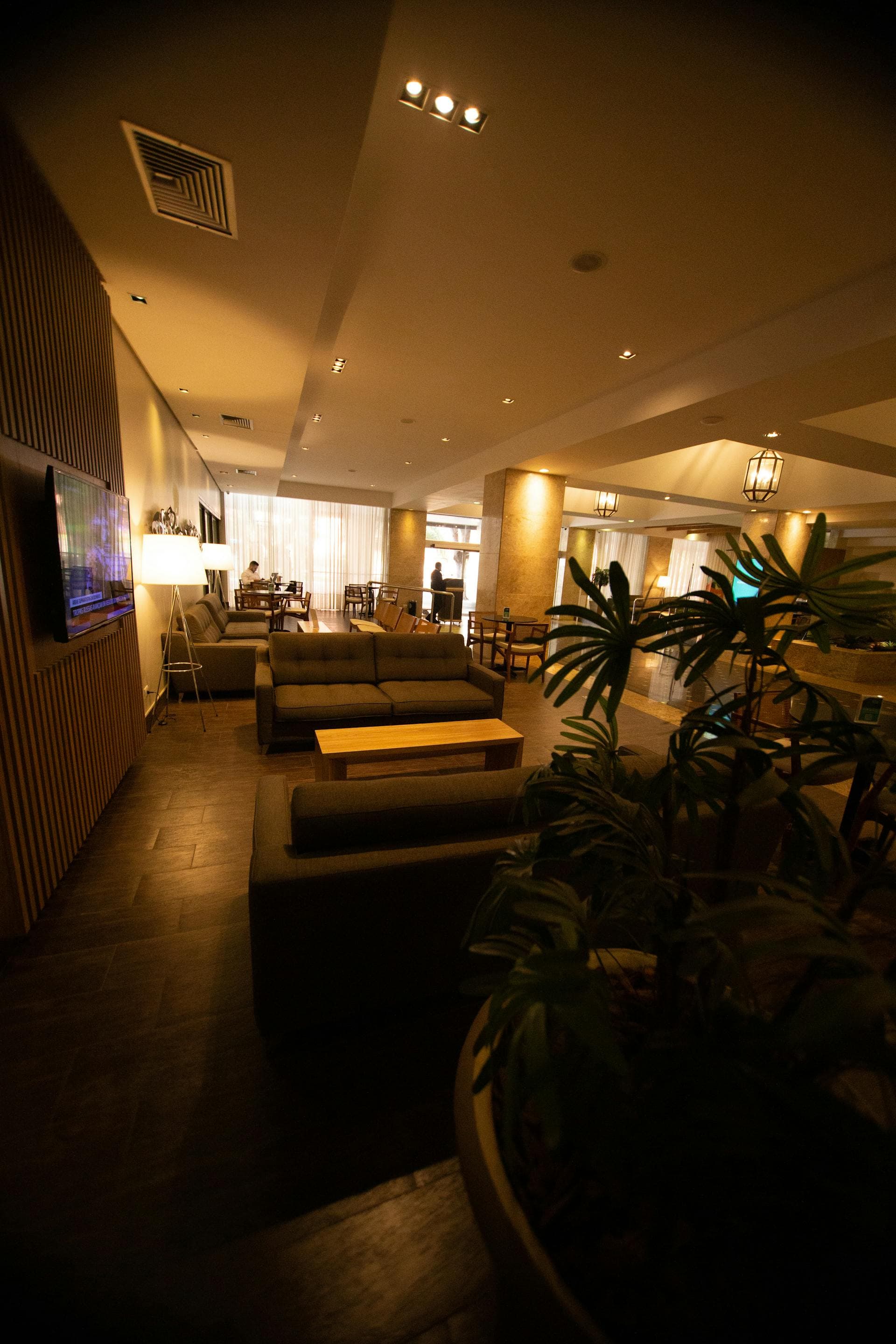
At a small regional airport, an FBO might be a single-story building with vending-machine coffee and a handful of plastic chairs. At Teterboro, Van Nuys, or Palm Beach International, it's closer to a five-star hotel lobby: marble floors, concierge staff, conference rooms, shower facilities, sometimes a barbershop or a restaurant. First-time charter flyers are sometimes surprised on both ends, either by how nice the nice ones are or by how stripped-down a small-town FBO can be. Knowing what to expect helps.
Multiple FBOs at the same airport
A busy private aviation airport usually has two to five competing FBOs. Teterboro is a good example: for more than 75 years it was home to Meridian, a regional operator famous for its service, alongside Jet Aviation, Atlantic Aviation, and Signature Aviation. In January 2024, Signature acquired Meridian, so Teterboro's former four-FBO landscape has now consolidated into three operators, with Signature running multiple terminals (TEB East, West, and South). That kind of consolidation is a recurring story across the industry. When you book a charter, your operator assigns a specific FBO, and that choice affects things like how long it takes to taxi to the runway, how close you park to the terminal, and whether you share the lounge with a dozen other travelers or have it mostly to yourself.
Who runs them
Signature Aviation is the largest network in the world, with more than 200 locations and ownership by a consortium of Blackstone, Global Infrastructure Partners, and Cascade Investment following a 2021 take-private deal. The next tier includes Atlantic Aviation, Jet Aviation (a wholly-owned subsidiary of General Dynamics and sister company to Gulfstream), Ross Aviation, Million Air, and Sheltair. Smaller independents still dominate specific airports and often have the most distinctive character. At Aspen-Pitkin County, for example, Atlantic Aviation signed a 30-year lease in 2024 and remains the only FBO on the field.
How FBOs show up on your bill
FBOs charge handling fees, ramp fees, and mark up fuel. These costs are normally rolled into your charter quote rather than billed to you directly, but they're part of why the same flight can be priced differently depending on which airport, and which FBO, you depart from. Your broker or operator picks the combination.